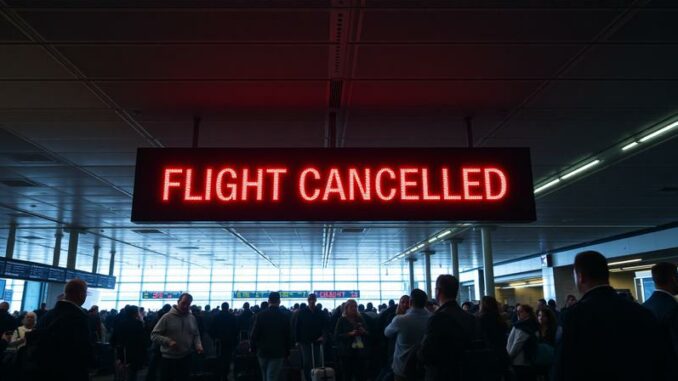
Canada’s air travel network faced another difficult day as major airports across the country reported widespread disruptions, leaving thousands of passengers scrambling to adjust their plans. Airports in Calgary, Edmonton, Montreal, Ottawa, Toronto, Vancouver, Winnipeg, and Regina experienced a wave of cancellations and delays that affected operations for Air Canada, WestJet, Jazz Aviation, Porter Airlines, Flair Airlines, and several international carriers. Reports indicated more than 140 flight cancellations and 271 delays throughout the day, creating major ripple effects across domestic and international routes.
The disruptions stretched from western Canada to Ontario and Quebec, impacting travelers heading to the United States, Europe, and other Canadian destinations. Aviation experts described the situation as one of the most significant nationwide travel disruptions seen this year.
Severe Weather and Operational Pressure Push Canada’s Aviation Network to the Brink
Much of the disruption was linked to powerful wind conditions moving through Alberta and neighboring regions. Strong gusts reportedly reached between 90 and 100 kilometers per hour in some areas, creating dangerous flying conditions and forcing airlines to ground or delay aircraft.
Edmonton International Airport emerged as one of the hardest-hit hubs, recording the highest number of cancellations among Canadian airports. Calgary also struggled with mounting delays as airlines attempted to reposition aircraft and crews throughout the day. Weather-related disruptions in western Canada quickly cascaded into eastern cities including Toronto, Montreal, and Ottawa due to interconnected airline schedules.
Airlines were forced to deal with aircraft arriving late, unavailable crews, and congestion at gates and runways. Once delays began piling up in Alberta, the impact spread rapidly through the national aviation system.
Toronto Pearson Experiences Massive Delays
Toronto Pearson International Airport faced some of the heaviest delay volumes in the country. Travelers encountered long lines, packed departure halls, and rapidly changing departure boards as airlines struggled to stabilize operations. Several international flights heading to destinations such as London, Miami, Cancun, Boston, and Zurich were delayed or rescheduled.
Air Canada operations at Pearson were particularly affected because the airline relies heavily on connecting traffic from western Canada. Aircraft arriving late from Calgary, Edmonton, and Vancouver caused additional delays for outbound flights throughout the day.
Passengers traveling through Toronto were advised to monitor flight status updates continuously and arrive early due to congestion at check-in counters and security screening areas.
WestJet and Air Canada Among the Most Affected Airlines
WestJet reportedly recorded one of the highest cancellation totals among Canadian airlines during the disruption period. The Calgary-based carrier faced operational challenges as strong winds interfered with departures and arrivals at its western Canadian hubs.
Air Canada, meanwhile, experienced one of the largest delay counts nationwide. The airline’s extensive domestic and international network meant that disruptions in one region quickly impacted flights across the country. Air Canada Rouge and Jazz Aviation also faced mounting schedule disruptions as delayed aircraft rotations spread through the network.
Porter Airlines and Flair Airlines were not immune either. Travelers flying on regional and low-cost carriers encountered last-minute schedule changes, delayed departures, and limited seat availability on alternative flights.
Routes Facing Heavy Disruption
Several routes across Canada experienced repeated delays and cancellations, especially those connecting major western hubs to Toronto and Montreal. Flights involving Calgary, Edmonton, Vancouver, and Toronto saw some of the highest operational strain.
Travelers heading to U.S. vacation destinations also faced problems. Flights to Las Vegas, Phoenix, Cancun, and Houston from Alberta airports experienced significant disruption as airlines struggled to operate safely in high-wind conditions.
International services connecting Canada with Europe also faced delays due to aircraft arriving late and airport congestion.
Travelers Left Stranded Across Multiple Airports
Scenes of crowded terminals and long customer service lines unfolded at several Canadian airports throughout the day. Some passengers reported waiting hours for rebooking assistance while others searched for hotel accommodations after overnight cancellations.
Travelers attempting to secure alternative flights encountered limited availability because airlines were already operating with packed schedules. Many flights that remained operational departed at near-full capacity.
Families, business travelers, and international tourists all faced uncertainty as disruptions continued into the evening hours.
Airlines Encourage Travelers to Use Mobile Apps
As airport service desks became overwhelmed, airlines encouraged passengers to use their mobile apps and online systems to manage reservations, request rebookings, and receive updates. Industry experts noted that digital self-service tools often provide faster assistance during large-scale disruptions than airport counters.
Passengers were also advised to keep checking flight information because conditions and schedules changed rapidly throughout the day.
Why Flight Disruptions Spread So Quickly Across Canada
Airline networks are highly interconnected, meaning delays in one major hub can quickly affect flights nationwide. When aircraft or crew members arrive late to one airport, subsequent departures are also pushed back. This creates a domino effect that can continue for hours or even days.
Canadian airlines rely heavily on hub operations in cities such as Toronto, Calgary, Vancouver, and Montreal. When these airports experience severe weather or operational strain, the consequences spread throughout the system almost immediately.
Researchers studying airline delay patterns have repeatedly found that disruptions grow rapidly when multiple airports experience simultaneous operational stress.
Weather Conditions Expected to Improve Gradually
Forecasts suggested that wind conditions in Alberta would begin weakening later in the evening, potentially allowing airlines to slowly restore normal operations overnight. However, aviation analysts warned that recovery could take additional time because aircraft and crews remained out of position across the country.
Passengers traveling over the next 24 hours were urged to check airline notifications frequently and remain prepared for possible schedule adjustments.
Passenger Rights Remain a Major Topic
The widespread disruptions also renewed attention on Canada’s Air Passenger Protection Regulations. While airlines are generally not required to provide financial compensation for weather-related cancellations, passengers may still qualify for rebooking assistance, meals, accommodations, or alternate transportation depending on the circumstances.
Travel experts encouraged passengers to save receipts, document communications with airlines, and review carrier policies carefully if their travel plans were significantly affected.
Canada’s Aviation Industry Faces Another Stress Test
The latest wave of disruptions highlighted the continuing pressure facing Canada’s airline industry. Weather extremes, staffing challenges, and tightly connected flight schedules continue to expose vulnerabilities within the national air travel system.
As airports and airlines work to recover from the latest disruption cycle, travelers across Canada remain hopeful that calmer weather and improved operational conditions will restore smoother travel in the days ahead.

Leave a Reply