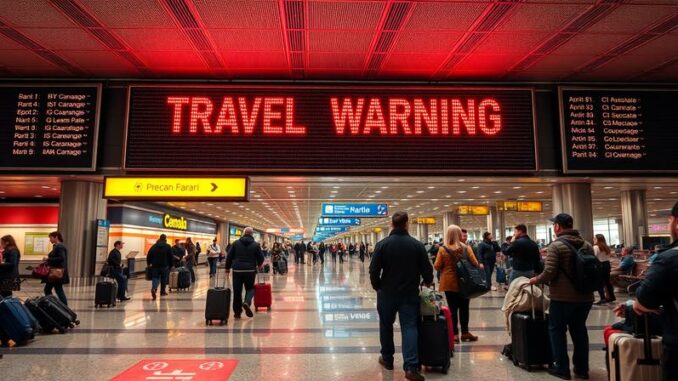
Canadians planning vacations or international trips in 2026 are being urged to prepare for major travel disruptions as the federal government warns that the ongoing conflict in the Middle East could affect flights worldwide.
With the busy summer travel season approaching, Global Affairs Canada has updated its advisory to caution travellers about increasing risks tied to fuel shortages, flight cancellations, rising costs abroad, and extended travel delays. The warning applies not only to people travelling to the Middle East, but also to anyone flying internationally, even on routes far from the region.
The advisory comes as global aviation networks continue to face pressure from instability surrounding fuel supplies and shipping routes connected to the Strait of Hormuz, one of the world’s most critical energy corridors.
Middle East Conflict Creating Global Aviation Problems
The conflict, which escalated earlier this year, has started to create ripple effects across the international airline industry. Fuel transportation networks have become strained, forcing airlines around the world to review schedules and operational costs.
Canadian officials say the impact is now reaching travellers globally.
According to the federal advisory, fuel shortages may result in flight cancellations, delays, rerouted flights, and interruptions to local services in destinations around the world. Travellers could also face unexpected increases in hotel prices, transportation costs, and food expenses if stranded overseas.
Officials warned that even travellers with no connection to the Middle East could still experience disruptions because many international routes depend on interconnected global airline systems.
Airlines Adjusting Schedules Amid Rising Costs
Canada’s major carriers, including Air Canada and WestJet, have already started making temporary scheduling adjustments as the aviation industry reacts to mounting economic pressure.
Longer flight routes, fluctuating fuel prices, and supply concerns are increasing operational expenses for airlines worldwide. Some carriers are reducing flight frequencies while others are reviewing international routes for the summer season.
Industry analysts say travellers may continue seeing reduced flexibility in bookings, limited seat availability, and higher airfare prices if fuel market instability continues.
Travel Insurance Concerns Growing for Canadians
One of the biggest concerns for travellers this year involves travel insurance coverage.
The government is advising Canadians to carefully review their insurance policies before leaving the country. Some travel insurance providers have reportedly introduced limitations or exclusions connected to fuel shortages and geopolitical disruptions.
Travellers are being encouraged to confirm whether their policies include trip cancellation, interruption coverage, emergency accommodations, and extended stay protections.
The advisory follows reports that some claims tied to fuel-related cancellations may no longer qualify for reimbursement under certain plans.
Read the Fine Print Carefully
Officials say travellers should pay close attention to exclusions, policy conditions, and requirements before departure.
Insurance providers may treat conflict-related disruptions differently depending on when tickets were booked, where travellers are headed, and whether warnings were already active at the time of purchase.
Experts recommend contacting insurance companies directly to clarify coverage details before making international travel plans.
Canadians Told to Prepare Financially for Delays
The federal government is also warning Canadians that they may need to support themselves financially if unexpected disruptions leave them stranded abroad.
Travellers are being urged to carry enough funds to cover extended hotel stays, meals, transportation, and emergency expenses. Officials also recommend bringing extra medication and maintaining access to emergency payment methods while overseas.
The government emphasized that it will not provide financial assistance to travellers facing extended stays caused by cancellations or fuel-related disruptions.
Emergency Planning Becoming Essential
Travel experts say emergency planning has become increasingly important for international travellers in 2026.
In addition to extra funds, travellers are encouraged to:
Passport and Visa Checks Strongly Recommended
Canadian officials are reminding travellers to carefully review entry and exit requirements before leaving the country.
Passports should remain valid for the full duration of travel and for additional time in case unexpected delays force travellers to extend their stays abroad. Some countries also require minimum passport validity periods beyond planned departure dates.
Travellers are also being urged to confirm visa requirements and electronic travel authorizations well before departure.
Keep Documents Secure While Travelling
The government advises Canadians to keep passports, identification, visas, and travel records stored safely while abroad.
Digital copies of important documents should also be kept separately in case originals are lost or stolen during travel disruptions.
Hurricane Season Adds Another Layer of Risk
Alongside concerns tied to the Middle East conflict, officials are also warning Canadians about the dangers of travelling during hurricane season.
Popular tourist regions across the Caribbean, parts of the United States, Mexico, and Central America may face severe weather risks during the summer and fall months.
Travellers visiting hurricane-prone areas are encouraged to monitor weather alerts closely and understand evacuation procedures before arriving at their destinations.
Storms Could Increase Delays and Costs
Severe weather events could place additional strain on airlines already dealing with fuel and scheduling challenges.
Experts warn that overlapping disruptions from hurricanes and global aviation pressures may create longer delays, crowded airports, and rising travel expenses during peak vacation months.
Government Advises Canadians to Assess Risks Before Travelling
Federal officials are not telling Canadians to avoid international travel altogether, but they are urging travellers to carefully assess the risks before booking trips abroad.
The advisory stresses the importance of flexibility, preparation, and staying informed as global conditions continue evolving throughout 2026.
Travellers are being encouraged to monitor airline updates regularly, stay in contact with travel agents when applicable, and prepare contingency plans in case their trips are interrupted unexpectedly.
For many Canadians planning vacations this summer, the message from Ottawa is clear: international travel may require more preparation, more flexibility, and more financial readiness than in previous years.

Leave a Reply